

The Fireplace July Edition Recap: Recognising and Sustaining OECMs: Inclusive Pathways for Biodiversity and Community Resilience
Date: 9th July 2025
Time: 3:00 PM - 4:30 PM SAST / 4:00 PM - 5:30 PM EAT
Speakers:
Daniel Marnewick, Regional Area-Based Conservation Coordinator, IUCN ESARO
Thomas Sberna, IUCN's Regional Head of Coastal and Ocean Resilience (COR)
Vladimir Russo, CEO/Executive Director of Fundação Kissama
Gladys Warigia, Policy Advocacy Manager, Kenya Wildlife Conservancies Association (KWCA)
Malidadi Langa, Chairperson of the Alliance for Indigenous Peoples and Local Communities for Conservation in Africa (AICA)
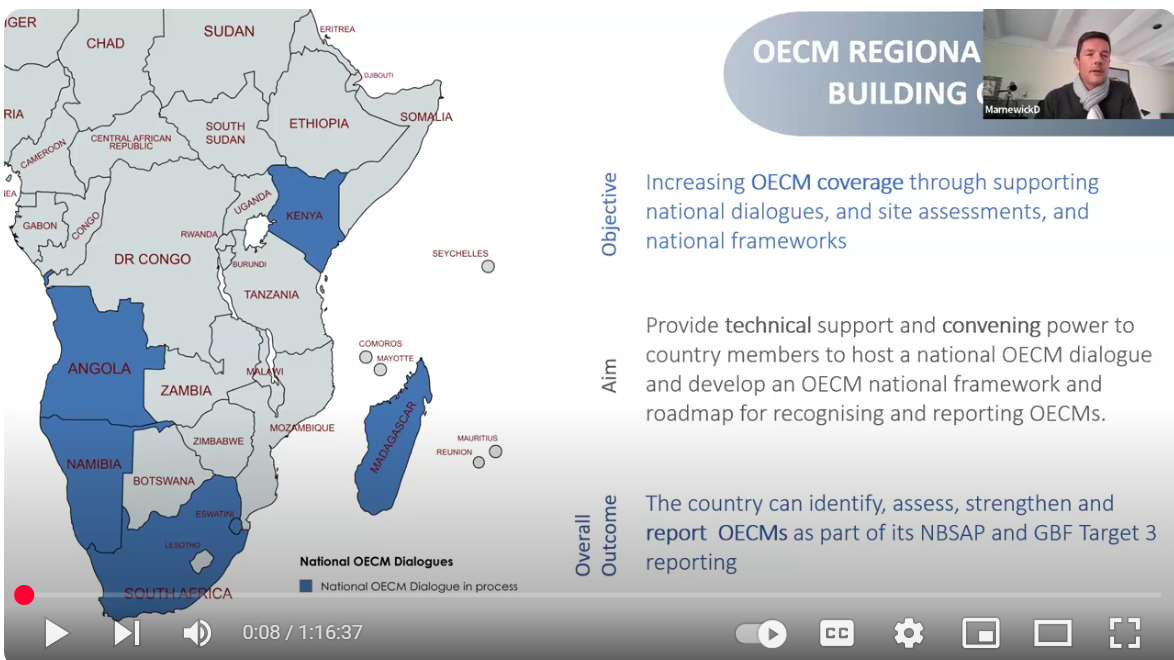
The recent "Fireplace" webinar brought together experts to discuss the crucial role of Other Effective Area-Based Conservation Measures (OECMs) in achieving global conservation targets, particularly the "30x30" goal. The session explored regional approaches, the unique challenges and opportunities in marine environments, and the indispensable contribution of Indigenous Peoples and Local Communities (IPLCs).
Key Discussions:
Regional Progress and Roadmaps: A regional approach to OECMs in Africa is vital, with a strong focus on empowering countries to identify, assess, strengthen, and report these measures. The development of comprehensive national frameworks requires iterative, multi-stakeholder dialogues, including policy reviews and on-the-ground case studies.
Marine Conservation's Missing Piece: Achieving ocean conservation targets heavily relies on marine OECMs, which are currently under-reported globally. The "Regenerative Seascape Approach" offers a holistic, integrated strategy for managing coastal and ocean areas, emphasizing local stewardship and ensuring socio-economic vitality alongside ecological health.
The Power of IPLCs: IPLCs are fundamental to effective OECM implementation due to their historical conservation efforts, traditional knowledge, and customary governance. Their legal recognition, strengthened capacity, and equitable participation are crucial for successful and just conservation outcomes.
Lessons Learned:
OECMs are a fundamental and complementary tool to traditional protected areas, vital for meeting global biodiversity targets, especially where new protected area designations are challenging.
Successful OECM implementation requires a participatory, national-level process that includes policy integration and on-the-ground validation.
Marine OECMs represent a vast, largely untapped opportunity that demands scaled-up, integrated approaches, prioritizing community-led initiatives.
The engagement and rights of Indigenous Peoples and Local Communities are not just beneficial but foundational for legitimate, effective, and sustainable conservation, contributing significantly to cost-effectiveness and landscape connectivity.
Moving Forward:
The path ahead involves accelerating national OECM dialogues, increasing reporting of both terrestrial and marine OECMs, fostering innovative approaches like Regenerative Seascapes, and critically, ensuring that legal recognition and empowerment of IPLCs are at the forefront of all OECM efforts.
A parting thought from Malidadi Langa: "The recognition of Indigenous Peoples and Local Communities and their territories as equals is paramount for effective conservation."