


On 29 September 2026, during EU Ocean Week, a unique event will take place at the European
Parliament, focused on the fascinating world of sharks and the crucial role they play in our
ecosystems and economies. Sponsored by Members of the European Parliament Manuela Ripa
(EPP) and Michal Wiezik (RENEW Europe), we are delighted to announce the attendance of two
world-renowned filmmakers and TV presenters from Germany and Sweden, Hannes Jaenicke
and Joakim Odelberg. They will share their experiences and discuss how the European Union
can be more effective in its role as protector of ocean resources.
Event sponsor MEP Manuela Ripa says: “The real danger is not the sharks. The real danger is a
world without sharks. Healthy oceans are the foundation of life on Earth. They sustain countless
species, regulate our climate, produce much of the oxygen we breathe, and support an
incredible diversity of life. Yet we are losing the very species that help keep these ecosystems in
balance. That has to change. We have to do more to protect sharks and take better care of our
oceans.”
Discussion will focus on the critical impacts of the international shark fin trade on biodiversity and
ocean health, as well as the role the European Union is playing in this trade. Also to be
discussed are the real socioeconomic impacts inflicted on coastal communities and fisheries by
declining shark populations and the very real threats that marine ecosystems are facing.
MEP Michal Wiezik, event co-sponsor, says: “Sharks are another group of completely
misunderstood apex predators while irreplaceable for the proper functioning of their respective
ecosystems, just like wolves. Due to their rather slow development and reproduction, the
recovery from declines for most sharks takes time. We cannot wait for legislation protecting them
until doomsday. The time to act is now.”
Organizing NGOs are calling on decision makers in Brussels to fulfill their promises and support the
democratic process that has led to this successful European Citizens' Initiative.
Christian Hempel, co-organizer of the ECI STOP FINNING – STOP THE TRADE says: "It's been over
three years since our successful European Citizens' Initiative calling for a complete ban on all shark
fin trade in Europe. Yet today, over a million EU citizens are still waiting to see any kind of meaningful
action from Brussels. Three years on from making their voices heard, European citizens are
disappointed and disheartened. They didn't mobilise for an 'impact assessment' or regulatory
adjustments that look good on paper. They mobilised for a full European shark fin trade ban. We call
on the European Commission to support the citizens and deliver on their promise!”
The general public can participate in person (must register), or remotely via Webex Webinar.
More information: https://www.oceanweek.eu/shark-protection-for-healthy-seas
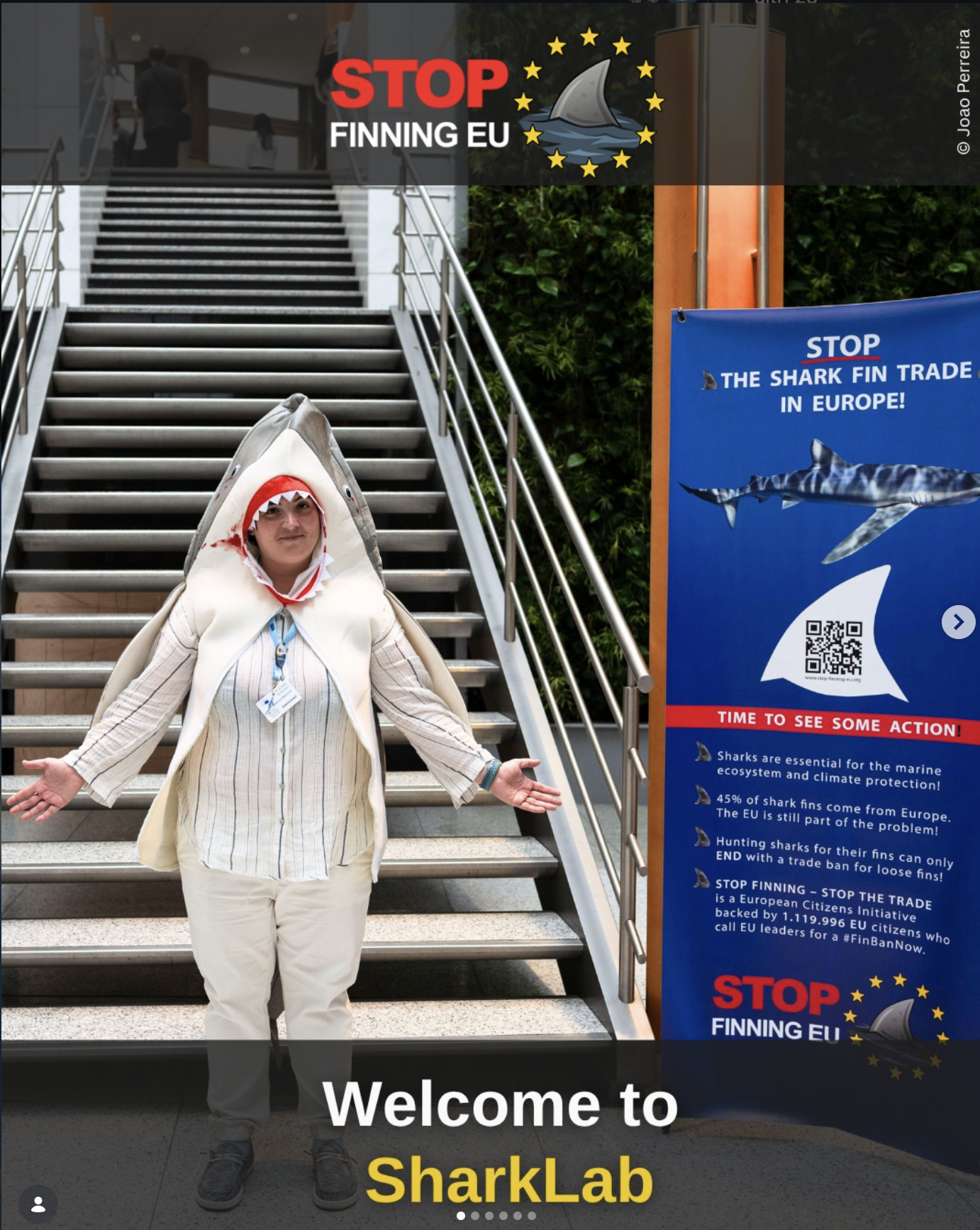
Background
STOP FINNING – STOP THE TRADE is a European Citizens' Initiative (ECI) that is supported by a
verified 1,119,996 European citizens, as well as hundreds of NGOs, partners and volunteers. This ECI
has been steadily winding its way through the complex European Union political process in Brussels
since 2022. Its end goal is to end the trade of shark fins in, from, and through the European Union.
• Scientists estimate that more than one hundred million sharks are killed each year, mainly to
supply the shark fin trade.
• 167 shark species are threatened with extinction. The number of sharks in the high seas has
declined by more than seventy percent in the last fifty years.
• The current high market value of shark fins is the main reason why sharks are being overfished
globally.
• Currently, EU member states Spain, Portugal, and France are among the Top 15 shark-fishing
nations in the world and even receive subsidies from the EU to do it.
• Although the EU has conservation obligations under the United Nations (UN) Convention on
Trade in Endangered Species (CITES) and the UN Convention on Migratory Species,
threatened and protected shark species are entering international trade due to weak or
inadequate legislation.