
On the southeast coast of India, where Tamil Nadu faces the shallow waters of Palk Bay, the sea is often green, turbid, and restless. Beneath that surface lies a world of seagrass meadows, crabs, fish, molluscs, seahorses, sea turtles, and dugongs.
In these waters, a traditional fisher enters the sea with very little equipment.
A mask.
His breath.
A hand held three pronged fishing tool locally called Manda.
What he carries cannot be measured by equipment alone.
He carries the memory of tides, winds, currents, sand banks, seagrass beds, fishing grounds, and seasons. He knows where the sea floor changes. He knows where crabs hide. He knows when the water colour shifts, when the current becomes stronger, when seagrass leaves begin to drift, and when the sea is giving a warning.
This knowledge did not come from a classroom.
It came from entering the sea again and again. From holding breath under water. From listening to elders. From trusting the body. From living with heat, wind, rain, risk, hunger, patience, and resilience.
In Tamil culture, the coast and sea belong to Neithal, one of the ancient ecological landscapes described in Tamil literature. It is the world of salt water, fishers, boats, shore birds, waves, waiting families, and people whose lives are tied to the sea.
This fisher stands within that long coastal history.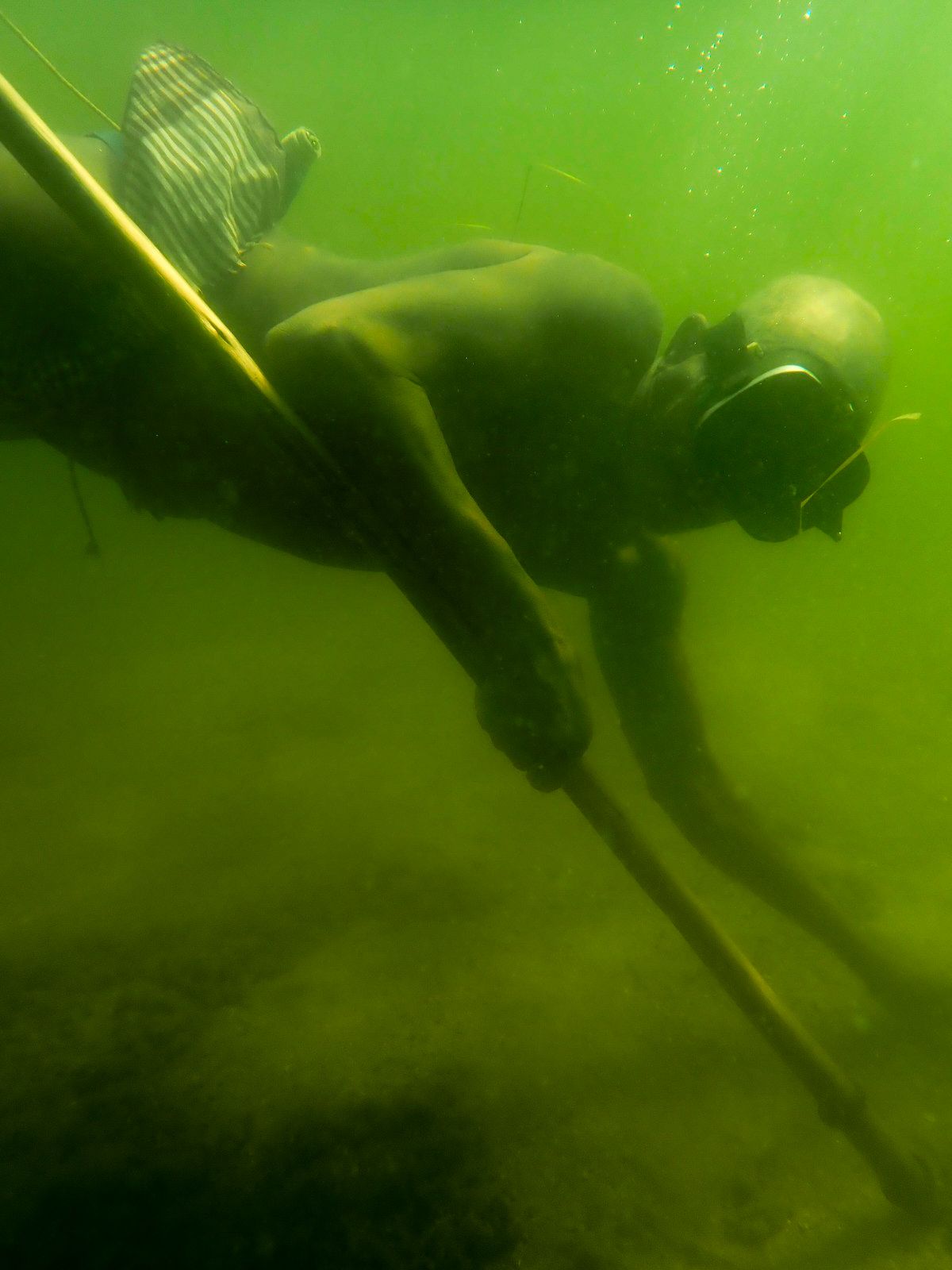
Palk Bay is one of India’s important seagrass seascapes. These underwater meadows support marine biodiversity, fisheries, coastal livelihoods, and climate resilience. They are also part of the habitat used by dugongs, one of the most threatened marine mammals in Indian waters.
Today, scientists use drones, underwater cameras, acoustic surveys, GIS maps, and ecological monitoring to study these habitats. These tools are essential. Still, the sea is also understood through people who have lived with it for generations.
Traditional fishers are often the first to notice change. They observe shifts in fish movement, seagrass condition, water clarity, currents, winds, and species occurrence through daily experience. Their knowledge can make conservation more practical, more respectful, and more rooted in real coastal life.
This image speaks of India’s coastal heritage, human dignity, field knowledge, and the intelligence of working closely with nature.
To protect seagrass meadows, dugongs, fishery resources, and marine biodiversity, conservation must respect the relationship between coastal people and the sea.
Science must listen to community knowledge.
Conservation must respect culture.
The future of the ocean must include the people who know it by heart.
கடல் வளம் காப்போம். மீன் வளம் காப்போம்.
Let us protect the sea. Let us protect the fishery.
#IUCNEngage #India #PalkBay #TamilNadu #MarineConservation #Seagrass #DugongConservation #SmallScaleFisheries #TraditionalKnowledge #CoastalCommunities #CommunityConservation #BlueCarbon