
Sixty forester trainees from the Tamil Nadu Forest Academy (TNFA) took part in a study programme at the OMCAR Palk Bay Centre, bringing together scientific knowledge, practical rescue demonstrations and the firsthand experience of local fishing communities.
Understanding dugong conservation requires knowledge of both marine ecosystems and the people who depend on them. This connection was central to a study programme on dugong conservation and management attended by the 55th batch of TNFA forester trainees, accompanied by Mr. V. Chellapandi, Forester.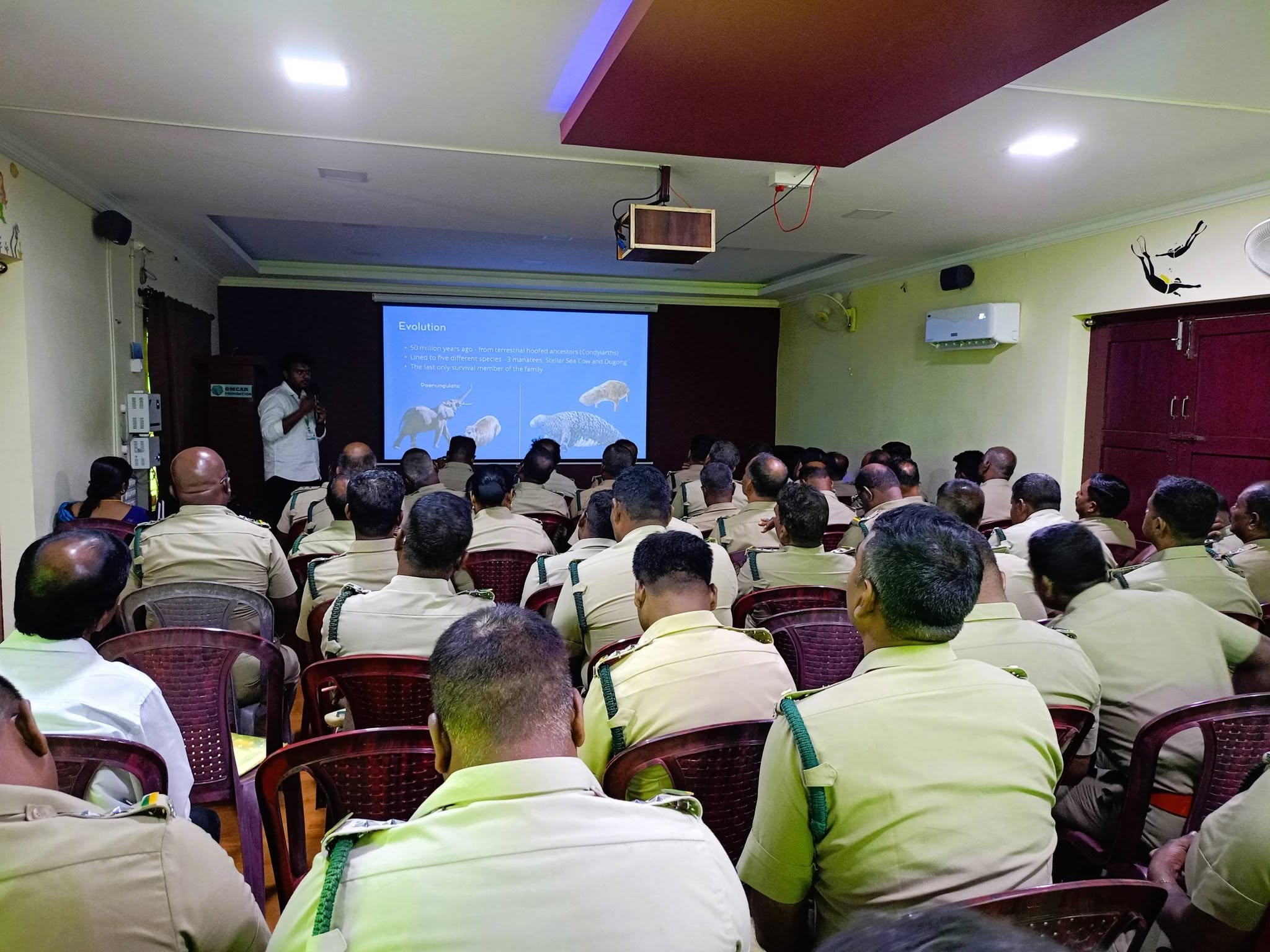
Mr. Anbu, Director, OMCAR Foundation, welcomed the participants. Mrs. Ananthi, Deputy Director, then introduced OMCAR’s marine conservation and research activities in Palk Bay, providing a local context for the sessions that followed.
Dr. Utthamapandian, Young Professional-II at ICAR-CMFRI, Kochi, delivered a session on marine mammals in Indian waters. He explored the distinctive characteristics, morphological adaptations, ecology and distribution of dugongs, highlighting the importance of Palk Bay and the Gulf of Mannar as key habitats.
The programme connected this scientific understanding with conservation challenges encountered in the field. Through presentations and videos, Mr. Anbu discussed threats to dugongs, stranding incidents, and rescue and release operations in Palk Bay.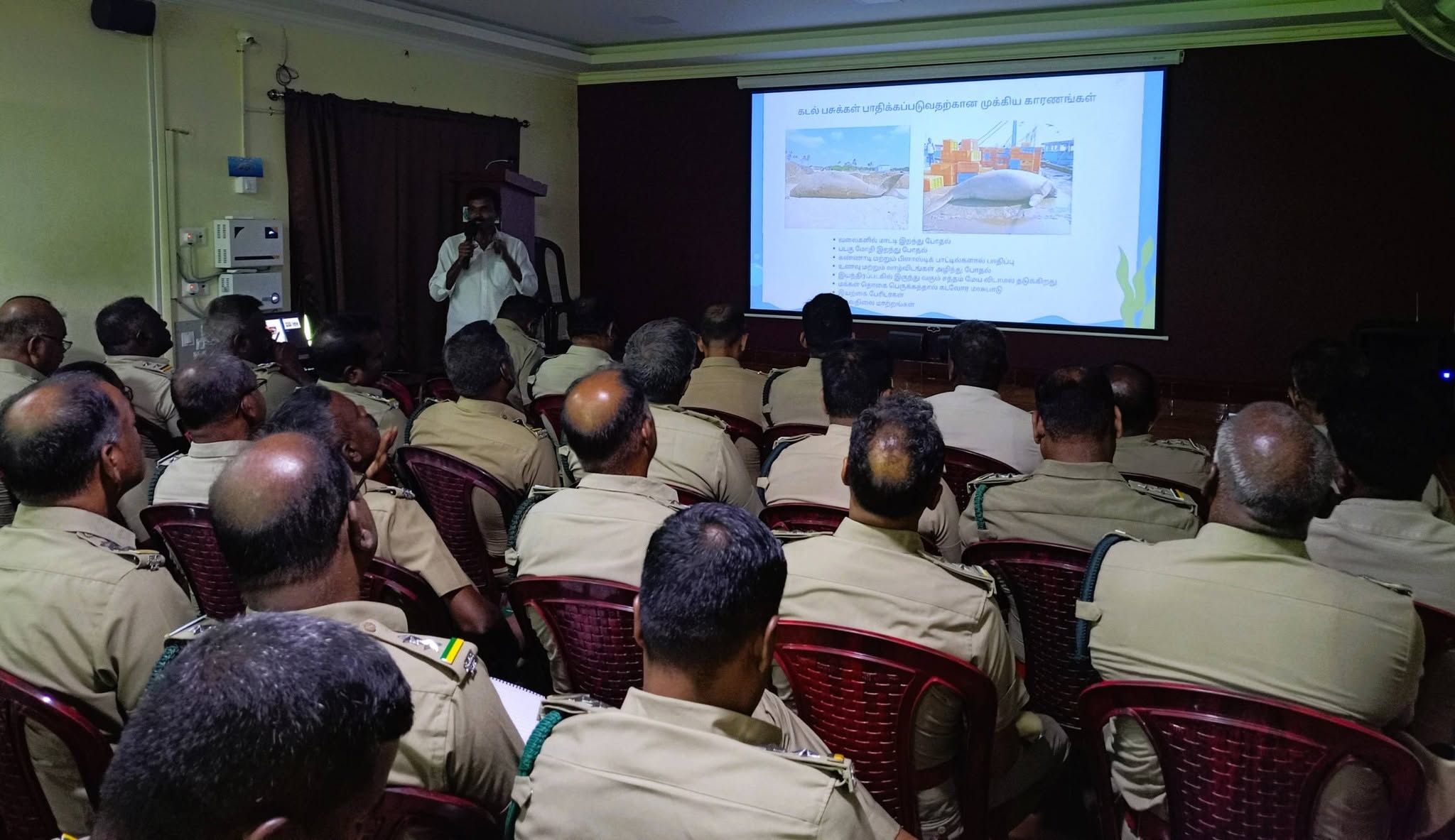
Local fishermen who had directly participated in dugong rescues shared their experiences with the trainees. Their accounts brought a community perspective to the programme, illustrating the important role of fishing communities in responding to incidents and supporting dugong conservation.
A practical demonstration using a life-size dugong model introduced trainees to rescue and release procedures, with emphasis on safe handling and release guidelines. The session provided an opportunity to relate the presentations to the practical demands of a rescue response.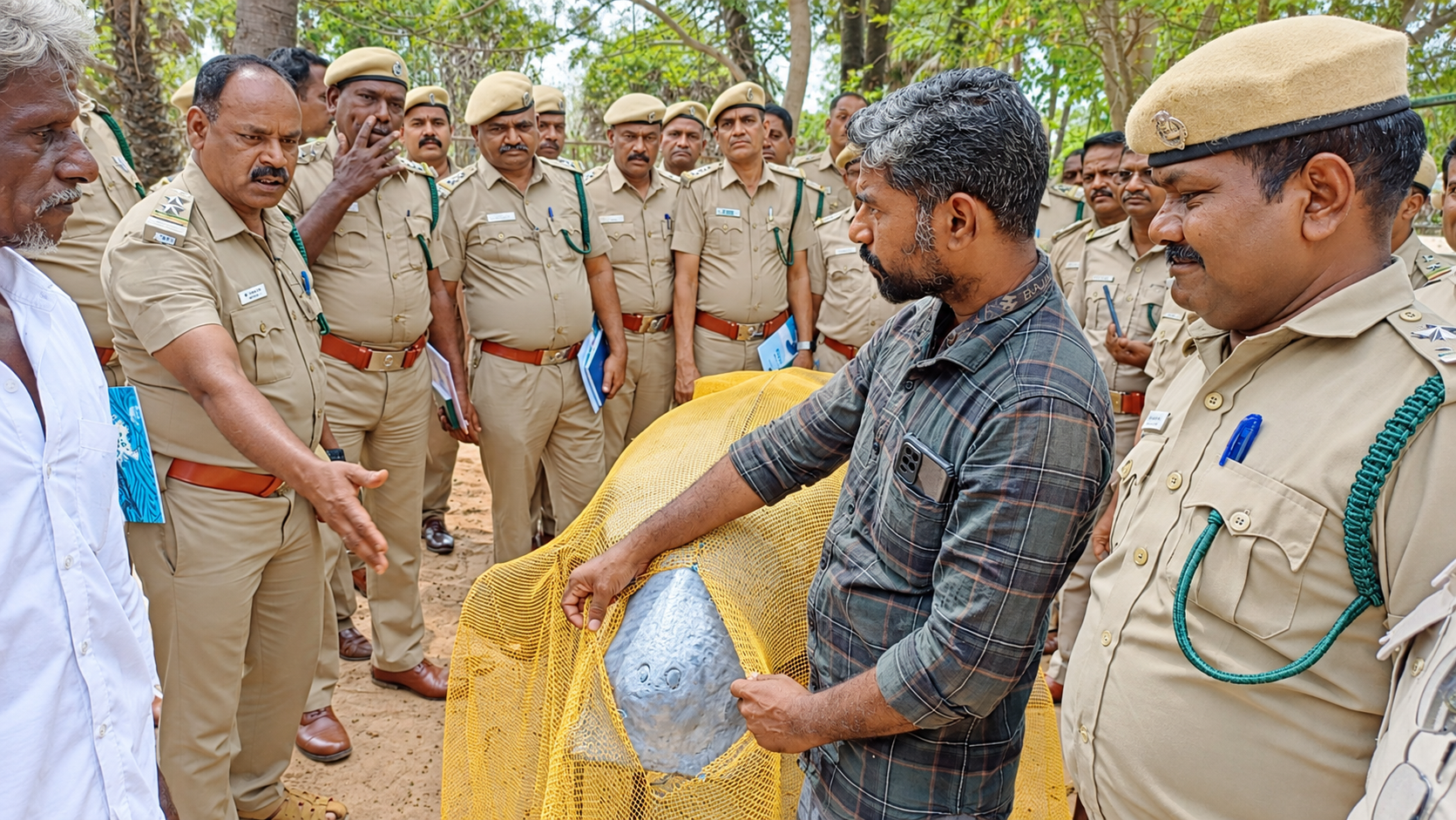
A local fisherman Maheshwaran, who rescued and released the dugong trained by Tamil Nadu Forest Department and Wildlife Life Insittute of India explaining to trainees, how he had released the head side of the dugong by tearing his net.
The trainees also examined marine research equipment and learned about its applications in research and conservation. A visit to the OMCAR Palk Bay Centre Museum offered further insight into the bay’s marine biodiversity. Mr. Madhava Anand, Deputy Director, OMCAR Foundation, concluded the programme with a vote of thanks.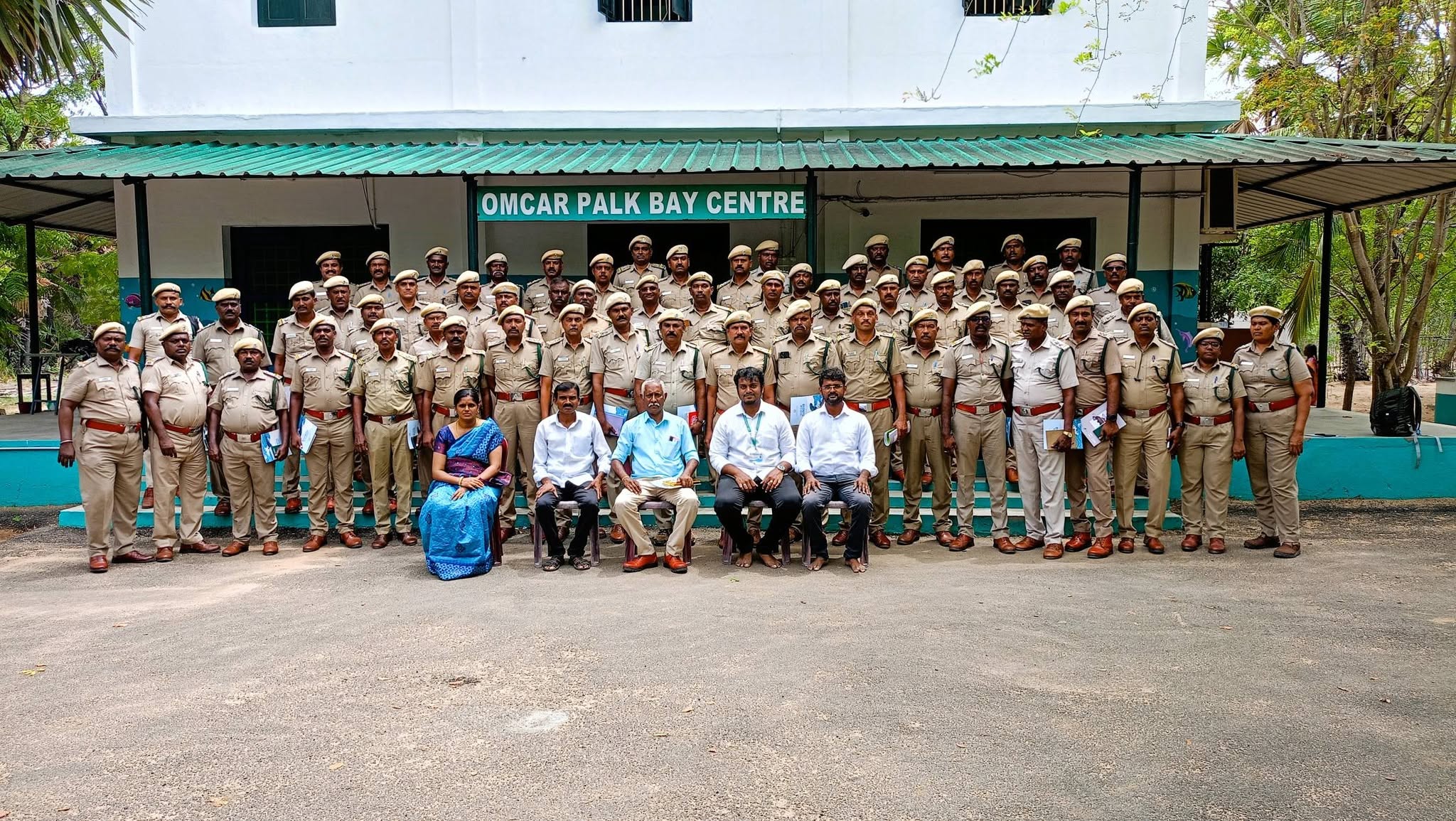
By bringing forester trainees, marine researchers and local fishermen together, the programme linked classroom learning with field experience. It highlighted the value of collaboration among forest personnel, scientific institutions, conservation organisations and fishing communities in protecting dugongs and their habitats.